Case Study — Brand Strategy

Rhode Skin is winning attention and losing customers

Why the prettiest brand in the room can't get people to come back — and exactly what to do about it

$1 billion. Sold-out drops. A phone case that broke the internet.
So what's the actual problem?

Rhode Skin is one of the cleanest celebrity brand launches of the last decade. Hailey Bieber went from 0 to a $1 billion acquisition by e.l.f. Beauty in May 2025 in 3 years. The Peptide Lip Treatment became a cultural object. The glazed donut aesthetic shaped a generation of beauty content. The phone case made a moisturiser into a visible, social object.

But attention and loyalty are not the same metric. What's sitting underneath all that buzz is a completely different story. First time buyers who don't come back, a product experience that lands just short of its promise and a brand that hasn't figured out how to make itself essential to someone's daily routine.
Rhode skin 1
Rhode skin 2
Rhode skin 3
Rhode skin 4
Rhode skin 5

The attention game? They're undefeated.

Rhode is not struggling to be seen. One Hailey Bieber Instagram post generates more organic reach than a quarter's worth of paid media for most competitors. The visual language is airtight with soft greys, warm beiges, clean type setting an effortless, elevated, quietly confident vibe.

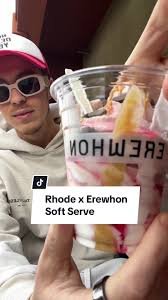
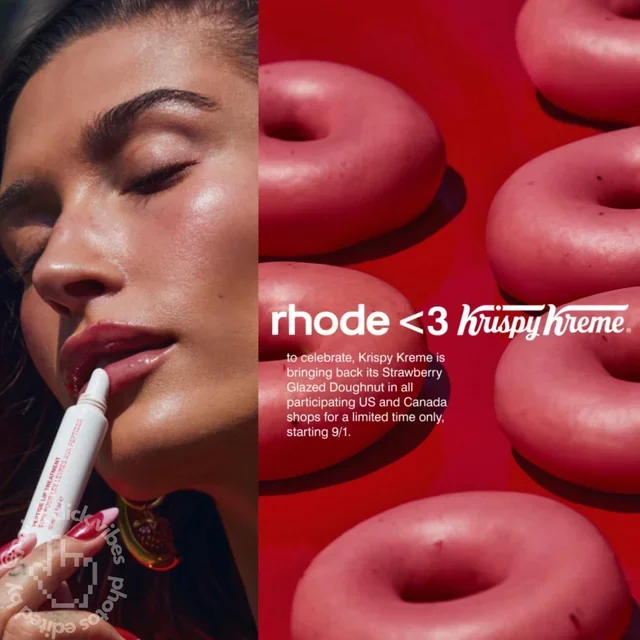
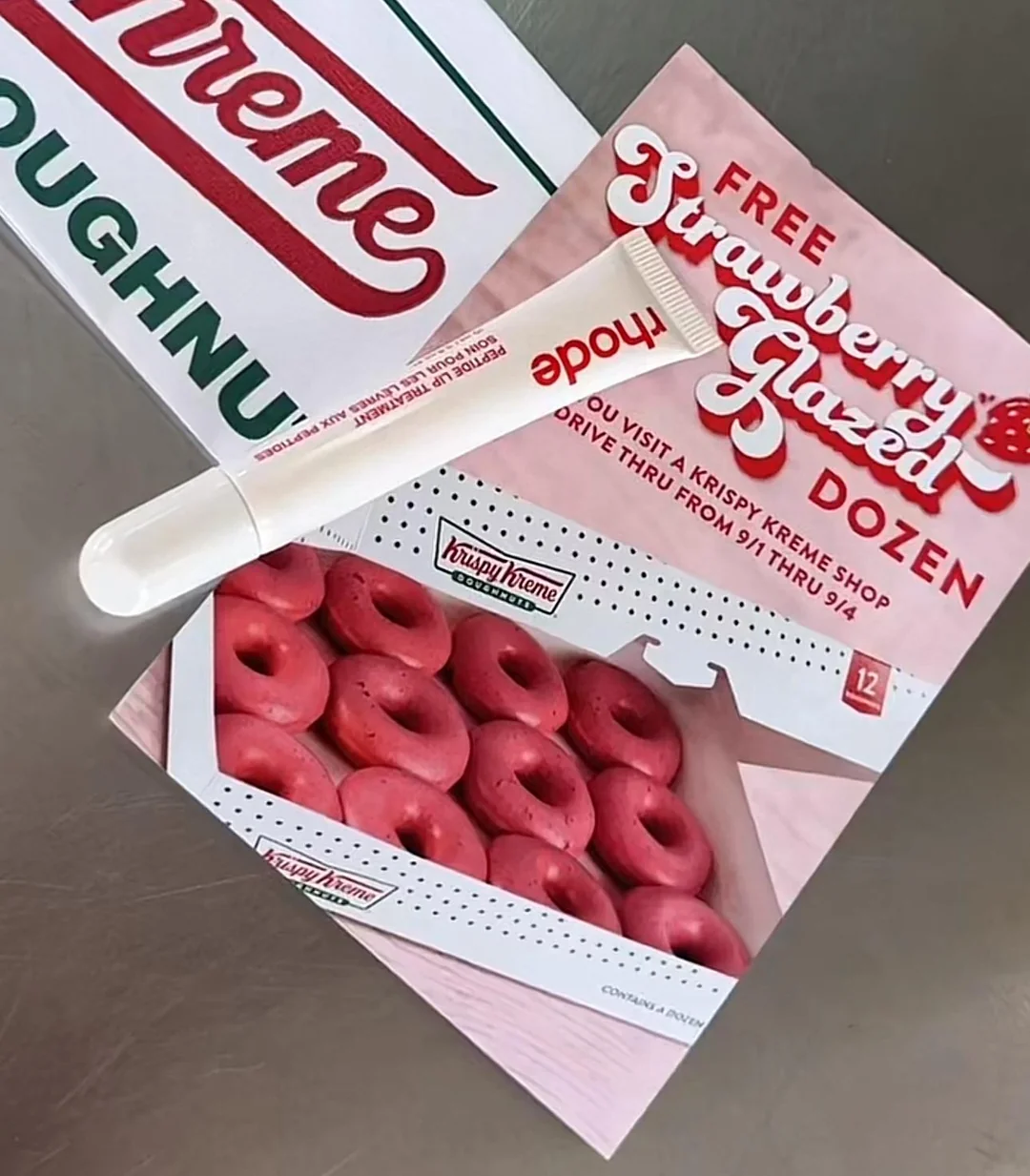
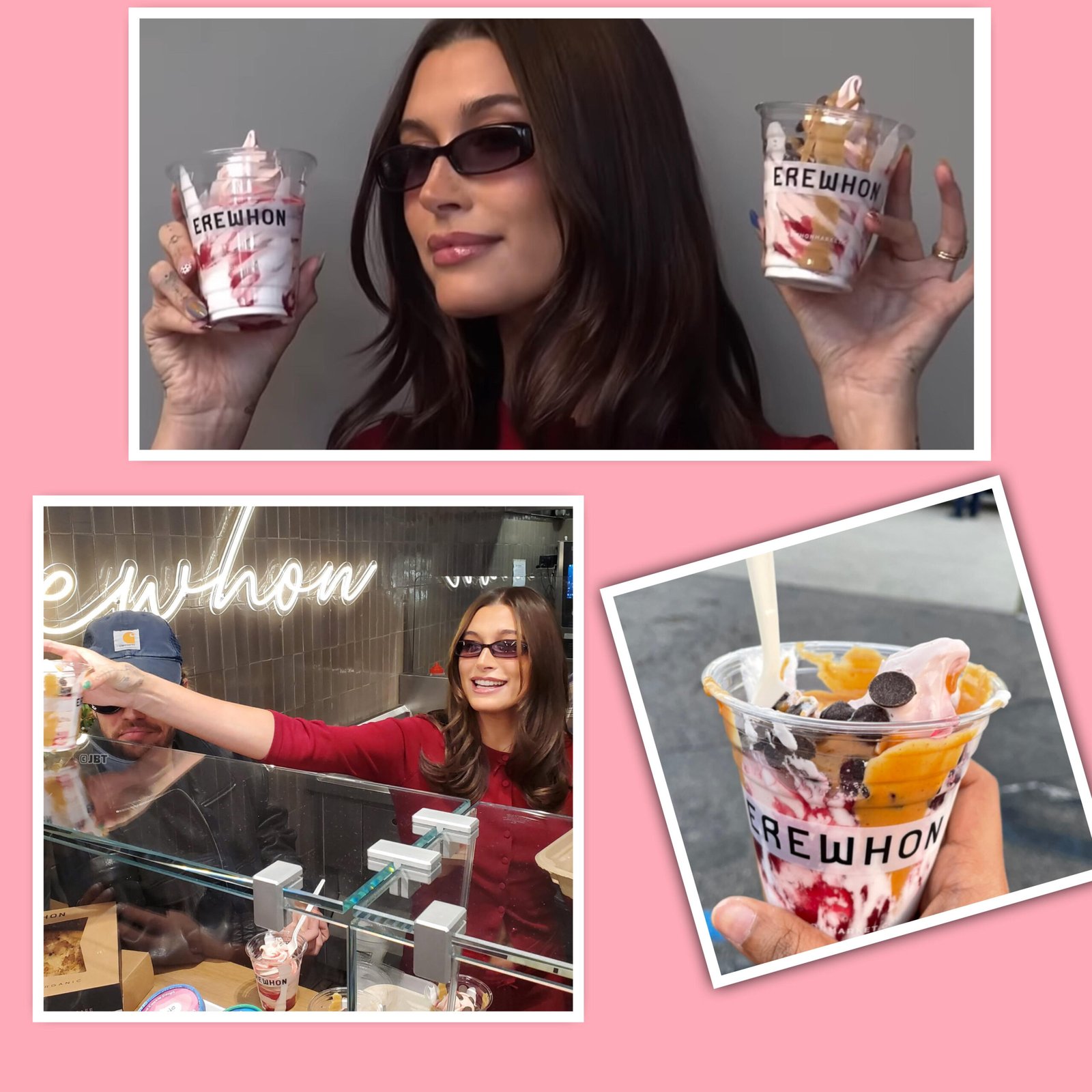
Collabs with Krispy Kreme and Erewhon turned the brand into a lifestyle signal, not just a SKU. The viral phone case that holds a lip treatment turned a $29 product into a piece of personal identity. TikTok Shop cleared over $1 million in the first half of 2025. Sold-out drops happen on a regular cadence. The hype machine is operational and well maintained.

People are buying. The problem is why.

The first purchase is simple. Affordable entry. Nothing above $38. Low-friction checkout, Sephora availability since late 2024, nonstop UGC making you curious enough to try. Rhode removes every barrier between curiosity and cart.

Customers do convert but just for a trial run. They want to see if the Hailey Bieber thing is real. They're participating in a moment, a trend. That's a completely different buyer than someone who chooses a brand because they can't picture using anything else and only one of them sticks around.

"I am not one to fall victim to celebrity beauty hype but the buzz around Rhode has been endless. I had to order some things to see for myself what it's about."

Curiosity buyer — alittlebitetc.com

"After my IG feed was flooded by Rhode's promo pictures, I finally bit the bullet and got the whole kit."

Social pressure buyer — marianainla.com

"Overall, the serum was not revolutionary enough for me to repurchase."

One-and-done — marianainla.com

"I didn't expect to like Rhode as much as I did."

Low-expectation buyer — marianainla.com
1 / 4
4. The break point

The gap between what it promises and what actually happens

Rhode phone case
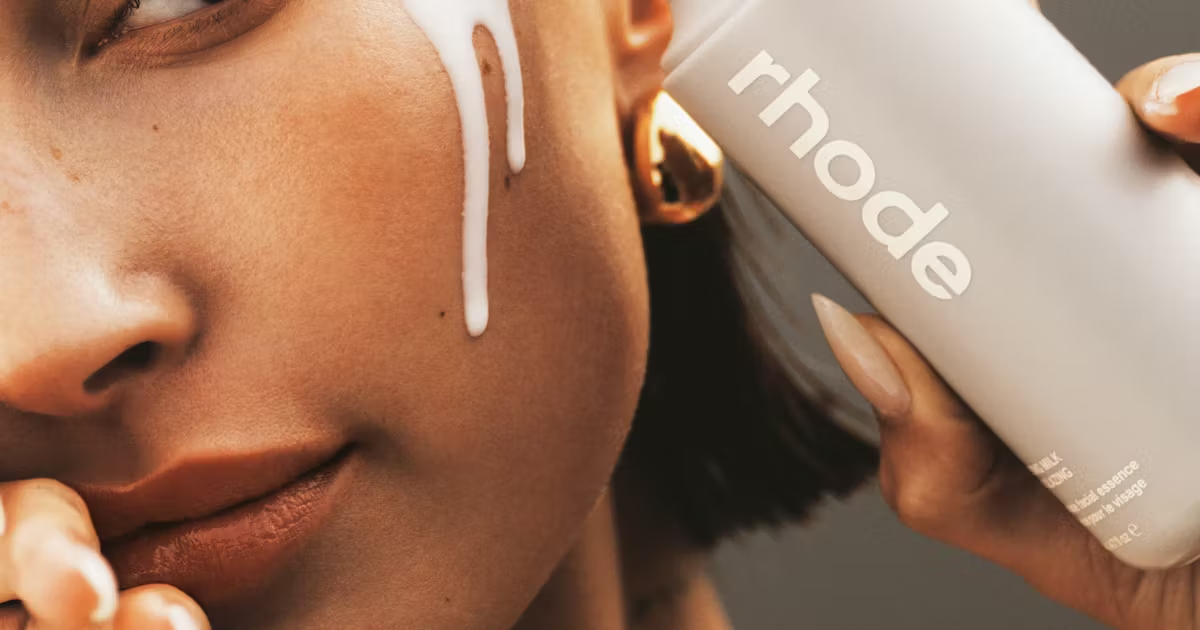
Rhode Glazing Milk

Rhode's marketing signals glazed, dewy, luminous skin, like a lifestyle upgrade that happens to come in a tube. The packaging is premium. The collabs are curated. Hailey's skin is aspirational. Rhode is not selling a product. It is selling Hailey's lifestyle.

Then the product arrives. And it's fine. Actually, for some products, more than fine. But fine isn't enough to bring people back. Fine doesn't change the way you feel about a brand.

Multiple reviewers said products worked exactly as described. Hydrating, dewy, clean-feeling. What they didn't say was: I found my thing. The feeling that turns a trial into a habit is almost entirely absent from how people talk about Rhode's skincare. The lip treatment is a different story. The Glazing Milk is a different story. But most of the line? People try it, rate it okay and drift back to whatever they had before.

"The only thing I liked about them was how moisturizing they are, but unfortunately, I will not be repurchasing."

Product worked. Didn't earn a return — ashestheticsblog.com

"Loved the concept but NOT the application. Does anybody else also experience this?"

Expectation gap — TikTok

"If you already use a serum containing ceramides and barrier-supporting ingredients, you may feel like the Glazing Milk overlaps with what you already have."

No distinct hook — layersofbeauty.com

"The serum was not revolutionary enough for me to repurchase."

Forgettable product story — marianainla.com
1 / 4

The Creator Roster Isn't a Community. It's a Mailing List.

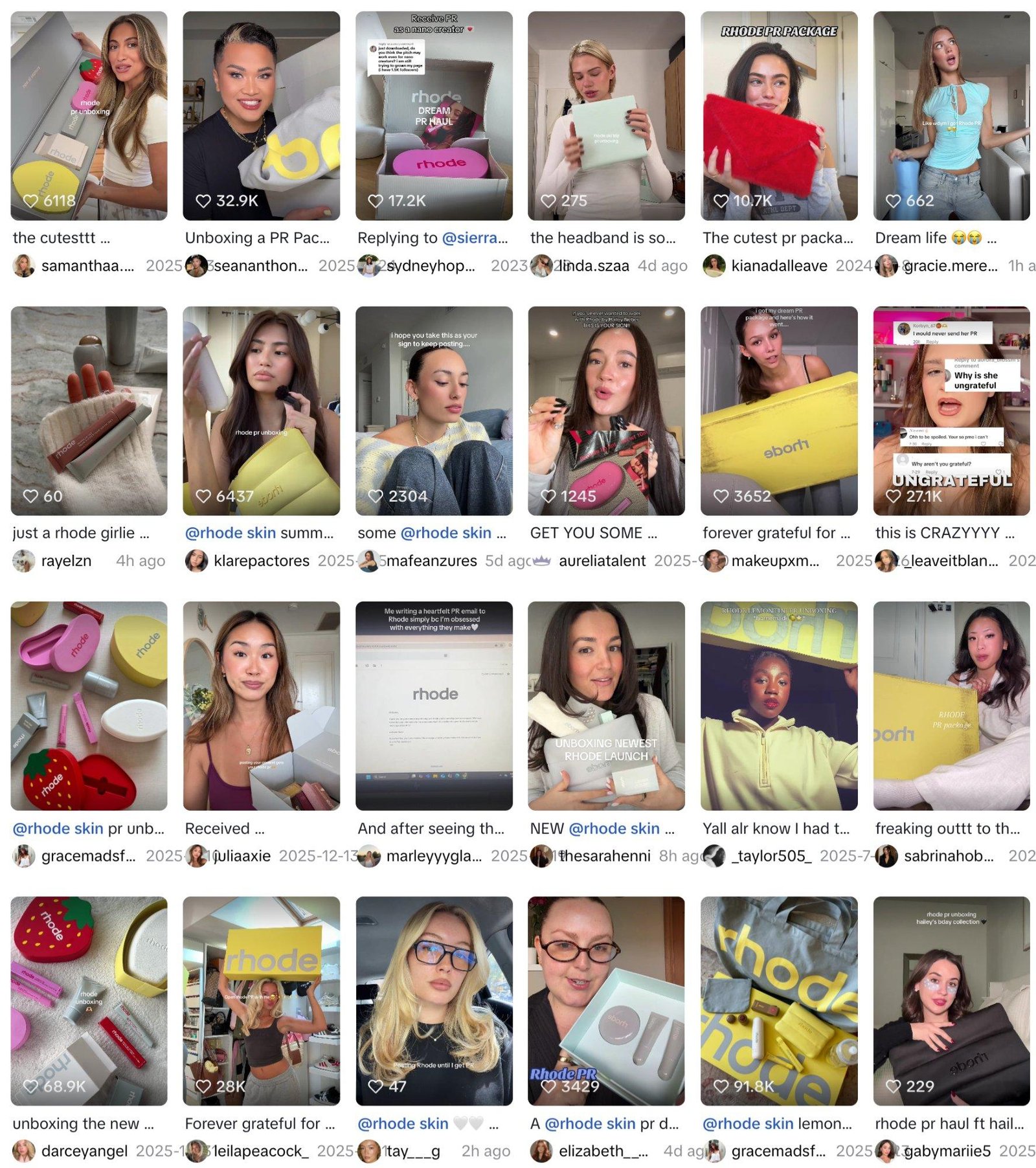
The pattern is consistent enough to look like a system. A drop happens, the same roster posts a quick unboxing or a three-second swatch, Rhode reposts the story, and those creators disappear until the next PR package. Nobody integrates the products into their real routine between launches. The content cycle mirrors the hype cycle exactly — which tells you that a significant portion of Rhode's creator ecosystem isn't a community of real users. It's a distribution network wearing the aesthetic of one.

Then there's the representation gap. Rhode's influencer pool skews heavily toward one aesthetic — tan, aspirational, affluent — in a brand positioned as accessible and priced for an everyday buyer. Customers have flagged that shade testing in PR seeding appears segmented, with very pale and very deep skin tones largely absent from content entirely. The community has been filling that gap themselves, doing the honest comparison work Rhode's own creator program was never designed to do.

When your actual buyer is a middle-class person trying to figure out if a $29 serum is worth it, aspirational imagery doesn't inspire. It alienates. And in a saturated skincare market where switching costs are zero, making your customer feel like an afterthought is just a retention problem waiting to compound.
"Same five faces every drop. I stopped watching because it felt scripted."

Creator fatigue — TikTok comments

"I had to find real reviews on TikTok myself. Nothing useful from the official creator side for my skin tone."

Representation gap — Reddit r/SkincareAddiction

"I love the brand but I don't feel like it's made for someone like me."

Community belonging — Trustpilot

"The moment a drop is over the account goes quiet. It's not a brand I think about day-to-day."

Between-drop silence — Instagram comments
1 / 4
Rhode gifting strategy
Rhode bath bomb

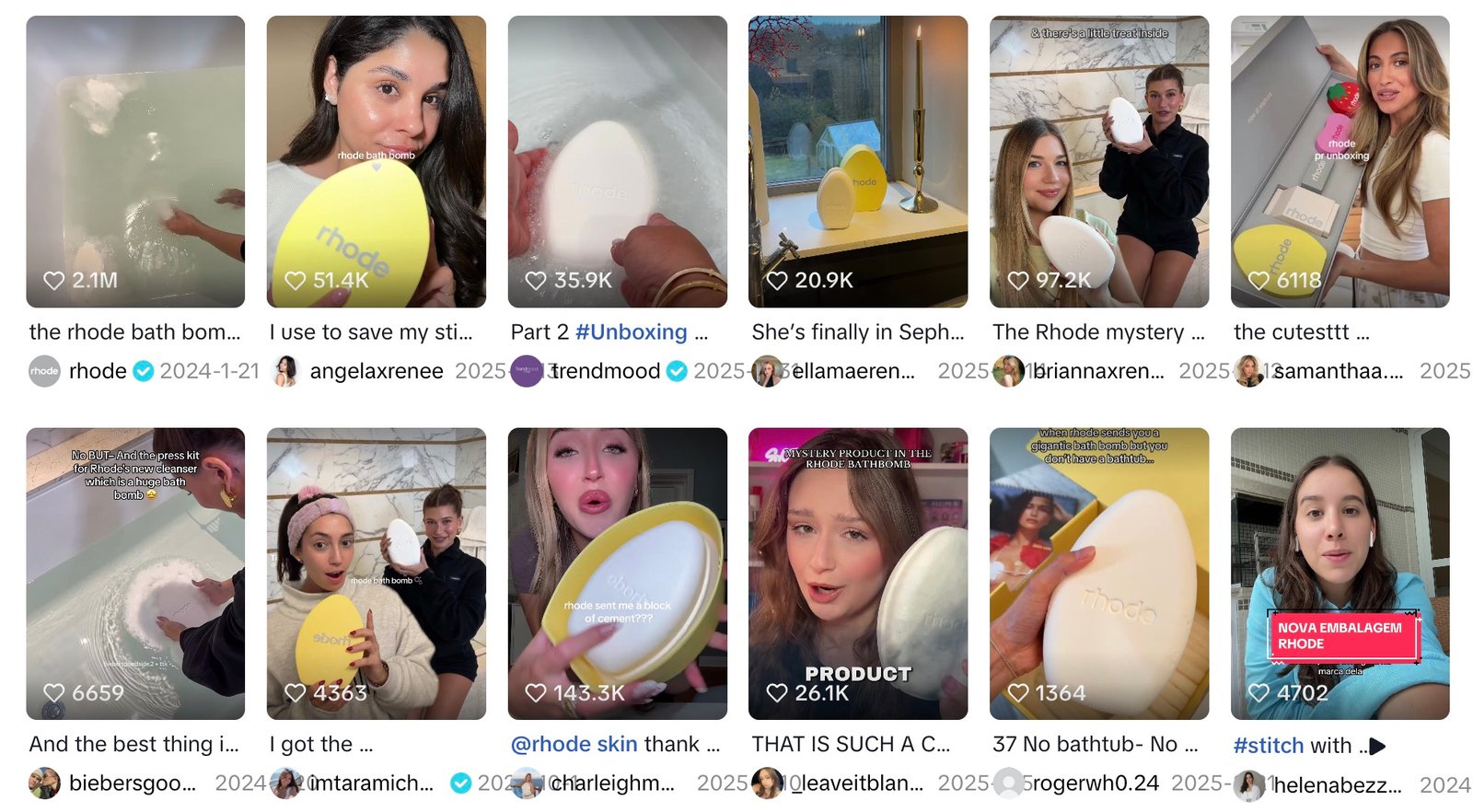
When a brand promises you a glow-up while selling a product, it's setting an expectation. The higher that bar sits, the harder the landing when the product shows up and it's just... meh. Rhode's products do work but customers walk in carrying the weight of its heavy influencer-driven promise, one that feels like a steal at that price point and walk away with a moisturiser. A good one. But still just a moisturiser.

This is the gap Rhode must address. You can't dial down the aspiration randomly that's what drives sales. But there has to be a balance between what's promised and what's delivered, or else sales start manufacturing disappointment instead of repeat purchases.

The Expectancy Violations Theory.
6. Business cost

This isn't a brand feeling. It's a P&L problem.

Rhode's retention issue is bleeding into unit economics right now. It costs 5–7x more to acquire a new customer than to keep one. Rhode is paying that premium on repeat and calling it growth.

Rising customer acquisition cost Hype drops create revenue spikes, not steady orders. Between drops, paid acquisition fills the gap to compensate for weak retention. That cost compounds every quarter just to maintain sales.
Weak lifetime value A customer who buys once has near-zero LTV. Rhode's per-product margin is fine but it only matters if they come back. Most don't.
Attention-driven growth cycles Without loyalty, Rhode needs a constant pipeline of cultural moments to keep revenue flowing. Manufactured virality gets harder and more expensive at scale.
Customer service eroding what retention remains Lost returns ignored. Defective products refused. Return fees charged back to customers. There's a specific kind of brand arrogance that assumes customers will absorb poor service because the product is cool enough. That logic holds nowhere in skincare, where switching costs are zero and the next brand is one search away. A customer who loved the product and got stonewalled by support document it publicly. And unlike product complaints, operational failures are much harder to spin with exactly the thoughtful, mid-budget buyer Rhode needs most.

Rhode isn't becoming part of anyone's actual routine

Beauty retention is brutal by default. The average brand keeps 20–30% of customers for a second purchase. That number drops even further when growth is driven by hype.

The customers who do come back are almost exclusively buying the Glazing Milk or the Lip Treatment — 2 products with a genuinely habitual use case. The rest of the lineup is doing trial volume without building repeat behavior. One hero product doesn't make a loyal customer base.

What's missing is a system that makes Rhode someone's default choice. Not just a trend. That only happens when a product becomes genuinely irreplaceable or when the brand stands for a clear point of view the customer actively identifies with. Rhode hasn't locked either in at scale yet.

"I have already repurchased the Glazing Milk multiple times. It's one of my most repurchased skincare items."

The exception proving the rule — alittlebitetc.com

"I've been using their products for a while now and my skin has honestly never looked this fresh. Everything feels really simple." Warm review. Zero urgency to stay.

Mild loyalty — Trustpilot

"Rhode lost my £346 return on the 15th of August and has avoided my emails ever since. I have emailed them over 10 times."

Post-purchase trust breakdown — Trustpilot

"I received a defective product and contacted customer service. Not only are they refusing an exchange, they are also demanding that I pay a return fee."

Retention destroyed at post-purchase — Trustpilot
1 / 4

What I would actually do about it

The problem isn't storytelling or community. Rhode currently sells trends and skincare goals packaged products. What actually builds retention is selling a structure that removes decision fatigue in a saturated skincare market. When a brand tells you exactly when to reach for it, what to skip and how to adjust when your skin changes, it stops competing with other products and starts competing with uncertainty. That's a much easier fight to win.

Move 01

Build usage decisions into the product story

Rhode tells you what's in the bottle. Customers ask when do I use this? With what? Instead of what I already have? That confusion kills repeat behavior. The fix is telling people when to reach for something, when to skip it and what that depends on then carrying that beyond the product page into every piece of marketing content.

Move 02

Use honesty as a brand weapon. Be loud about it

Every skincare brand tells you what the product can do. Almost none tell you when it won't work. Rhode's current FAQ is buried under the lifestyle photography. It reads like a legal disclaimer. The fix is moving that information upstream into creator briefs, ad creatives and pinned content where decisions actually get made.

Move 03

Fix the influencer strategy. It is a visible credibility problem

The same roster, the same script, the same window. Customers have clocked it and stopped trusting the content. The representation gap of pale and deep skin tones largely absent, skewed shade testing is costing real sales. Rhode needs to restructure PR seeding around actual users, not just a safe set of content creators.

Move 04

Fix customer service. It's destroying the retention Rhode does earn.

One resolved complaint has a statistically higher chance of producing a loyal repeat customer than any brand marketing because it turns a negative experience into evidence that the brand actually cares. The cost of fixing this is a fraction of the acquisition spend required to replace every customer it's losing.

EXECUTION OF STRATEGIC PROPOSALS

Adaptive pathways instead of static routines

Instead of "AM routine / PM routine," Rhode could offer context-specific guidance on the website, in UGC, in creator briefs, in email. The same pathways that live on the site should be the brief every creator gets. This is what makes a brand feel irreplaceable.

Skin feels tight
→
Layer and seal. Your barrier is asking for more. Glazing Milk first, then Barrier Restore Cream. Skip exfoliating acids entirely today. Seal with Barrier Butter on cheekbones overnight.
Skin irritated
→
Strip it back. Less is more right now. Cleanser and Glazing Milk only. Nothing active. No acids, no retinol, no vitamin C. Let your skin breathe for 3–5 days before adding anything back.
Skin oily today
→
Lighter layers. Same products. Don't overcorrect. Glazing Milk only. Skip the heavy moisturiser. Oily skin often means your barrier is compensating for being stripped. The Glazing Milk can help regulate over 2–3 weeks of consistent use.
Post-travel
→
2 steps. No overthinking. That's tonight's whole routine. Cleanser, Glazing Milk, Lip Treatment. Skip every active, serum, and treatment. Drink water first. No product out-works dehydration.
Messaging rewrite

Same product. Different frame.

Watch what shifts when the messaging stops performing and starts actually helping.

Messaging Studio

Select a product to see the rewrite

Current copy
Glazing Milk
A lightweight milky essence to prep skin, boost barrier function, and deliver instant, lasting hydration. For all skin types. Shake, press, glow.
Missing: How to use, what it replaces. Leaves every decision to the customer.
Rewrite
Glazing Milk
Your skin's first step. Use this before everything else — it preps your barrier so every product you layer on top actually absorbs. On low-product days, it's your whole routine. Skip it on nights you're using retinol or strong acids. Let your skin focus on one thing at a time.
What changed: tells you when to use it, when to skip, and how it fits without needing to buy more.
Current copy
Barrier Restore Cream
A rich, intensely moisturising cream that restores the skin barrier, seals in hydration and leaves skin looking plump and healthy. For dry and sensitive skin.
Missing: the customer doesn't know when their barrier is compromised or how this fits alongside their existing moisturiser.
Rewrite
Barrier Restore Cream
This is for when your skin is stressed, tight after cleansing, reacting to products or just not recovering the way it should. Use it instead of your normal moisturiser on those nights, not on top of it. If you're oily in summer, this is too heavy. Glazing Milk alone is your better call.
What changed: tells you when to swap it in, what it replaces and who it's not for. Customers trust modesty more than a generic description.
Current copy
Peptide Glazing Fluid
A lightweight peptide serum that targets fine lines, boosts radiance and delivers a signature glowing finish. For all skin types, day and night.
Missing: what makes it different from your existing serum and whether it's worth adding at all.
Rewrite
Peptide Glazing Fluid
Use this as your serum but not in addition to one you already have. Best results come at week 3, not day 1. If your main concern is acne or texture, pair this with a targeted active but don't expect this to do that job alone.
What changed: sets accurate expectations. Customers who know what to expect don't feel let down and come back.
Current copy
Peptide Lip Treatment
The cult-favourite lip treatment. Deeply nourishing, insanely hydrating, impossibly glazed. Available in 20+ shades. Keep one everywhere.
The strongest product in the line but the copy relies on its marketing hype and no guidance.
Rewrite
Peptide Lip Treatment
Apply it before bed every night. The peptide effect is cumulative, not instant. By week 3 you'll notice your lips looking better even before you put anything on. Not a gloss. Use it daily before damage shows up.
What changed: explains the mechanism, sets a timeline, gives a behavior to follow which is what creates habit.
Interactive demo

What this could actually look like on Rhode's site

Live prototype of the decision layer Rhode should own. Pick a skin state. Get an honest, specific answer.

Skin State Guide

How's your skin feeling right now?

Live prototype

Pick your skin's current state and get a customised routine for yourself.

This is the kind of guidance Rhode could put on every product page, every email and in every creator brief. It changes people's perception of Rhode from a product catalog to something credible in an ocean od identical skincare selling marketing gimmicks.

Improving visual marketing

From hype copy to copy that earns trust

The FAQ buried at the bottom of some product pages feels like a hidden disclaimer trying to cover liability, instead of helping the user. Requiring the customer to scroll past claims and lifestyle photography to find anything resembling a caveat.

No brand knows every reaction but they do know the common irritants from testing. Most hide behind legal minimums and trade secrets. Saying it upfront wouldn’t hurt the product. It would expose how rare real transparency is. Publishing them wouldn’t weaken the product. it would signal a brand willing to be bold and honest where most choose to hide behind a grand ingredient list.

When customers know what to expect through honest content and the product delivers on that accurate promise, repurchase rates improve. Brands that feel straight with you command a price premium over time and keep customers longer.

Revisiting UGC content

Rebuilding the influencer problem from the brief out

Restructure PR around actual product users, not just reach. Prioritize micro-creators and everyday buyers who will use the product beyond the unboxing window. Brief all creators on what to cover that is not already on the product page. Skin state guidance, incompatibility warnings, realistic result timelines, honest edge cases without heavy base products applied first. Make "when not to use this" a content pillar, not a disclaimer. One creator, one product, one honest use case per week is more valuable than 10 identical unboxings.

For products with documented irritation complaints, address them proactively in a pinned post or creator video.

Expand the influencer range deliberately to include undertones, skin types and aesthetics that reflect the actual buyer, not just the aspirational image. Track creator content beyond the first 72 hours of a drop. If a creator never mentions the product again, that's a signal about the value of that relationship.

Scripted, homogeneous creator content is eroding trust faster than it's generating it. Customers who've learned to ignore launch content are making decisions from third-party reviews and community platforms instead. These are environments Rhode has no control over and no positive presence in. Shifting even a portion of PR budget toward genuine everyday users generates content with longer shelf life, higher credibility and better conversion for the customers who actually need persuading. Representation gaps cost real sales: a customer who can't find their skin tone in any creator content is a customer ignored.

Customer is King

Customer service as a retention tool, not a cost center

Establish a public-facing response protocol for negative reviews on Trustpilot and similar platforms. Genuine acknowledgement and resolution, not defensive replies. Set internal SLAs for complaint response and actually staff them. Use documented complaint categories (lost returns, defective products, ignored emails) to identify whether this is a logistics, CS team or policy problem and fix the root cause. Consider proactive outreach for flagged orders, which costs almost nothing operationally and generates outsized goodwill.